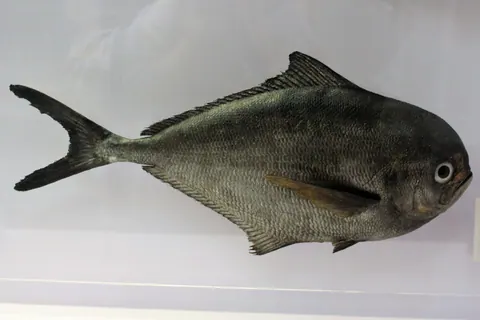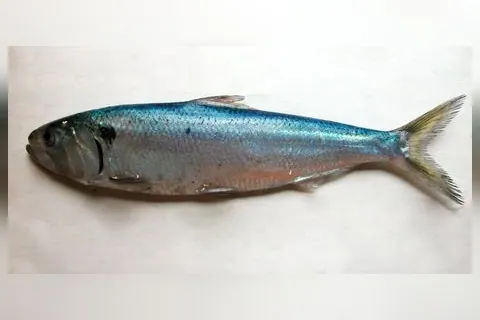

The smelt is a slim silver fish with a green-grey back and a forked tail. Our sources do not record it off the Sussex coast. British boat record: none listed.
Download the smelt fish guide (PDF)2 pages, A4, 119 KB: the facts on this page, the picture and how to fish with us. Free to print.
About the smelt
The smelt is a slim silver fish with a green-grey back and a forked tail. When fresh it smells of cucumber, which is the giveaway. It is easily mistaken for a young bass or herring. It lives in estuaries and close inshore, and it can travel far up rivers. Wikipedia gives an average of about 16.5 cm and a maximum of 45 cm, while British Sea Fishing says up to about 12 inches. In the UK it is rare and patchy, the population is depleted, and it is a species of principal importance. Most anglers who catch one do it by accident on mackerel feathers, daylights or small lures. It spawns in spring as the water warms, and a Natural England-linked source says adults gather in estuaries over winter, with the Thames in February. It appears only on the mini-species page of the British Record Fish Committee list, with no separate boat record. If you catch one, return it gently.
On the boat
Smelt are mostly caught by accident on mackerel feathers, daylights or small lures. If you do target them, use small hooks, size 4 to 10, with feathers. They spawn in spring as the water warms. A Natural England-linked source says adults gather in estuaries over winter, with the Thames in February. No Sussex months are given in the record.
British boat-caught record
None listed
No British boat-caught record is listed for this species. Smelt appear only on the British Record Fish Committee mini-species page, which has no boat and shore split. That mini-species record is G. Idiens, Fleetwood, Lancashire, 1981.
How we label records: the British boat-caught records table explains confirmed, claimed and none listed.
Care and rules
The UK smelt population is depleted and the species is one of principal importance. No minimum size was found on the GOV.UK MCRS table. Handle it gently and return it. Rules change: check the current rules before you fish.
Did you know?
A fresh smelt smells of cucumber. That scent is one of the easiest ways to tell it from a young bass or herring.
Questions about the smelt
What is the British boat-caught record for smelt?
No British boat-caught record is listed for this species. Smelt appear only on the British Record Fish Committee mini-species page, which has no boat and shore split. That mini-species record is G. Idiens, Fleetwood, Lancashire, 1981.
Is smelt caught off the Sussex coast?
Not according to the sources behind this guide.
When is the best time to catch smelt?
Around Britain: Spawns in spring as the water warms. No other catching months given. A Natural England-linked source says adults gather in estuaries over winter (Thames: February). Our sources give no months for Sussex.
How big does a smelt get?
Up to about 12 inches. Wikipedia gives an average of about 16.5 cm and a maximum of 45 cm.
Sources
- British Sea Fishing: smelt: britishseafishing.co.uk
- Wikipedia: European smelt: en.wikipedia.org
- BRFC sea fish records, June 2026: anglingtrust.net
Picture: Виктор, file page on Wikimedia Commons. Every picture in the guide is listed on the picture credits page.