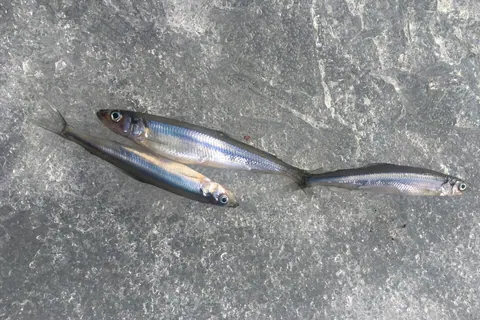
The allis shad looks a lot like a herring. Our sources do not record it off the Sussex coast. British boat record: none listed.
Download the allis shad fish guide (PDF)2 pages, A4, 137 KB: the facts on this page, the picture and how to fish with us. Free to print.
About the allis shad
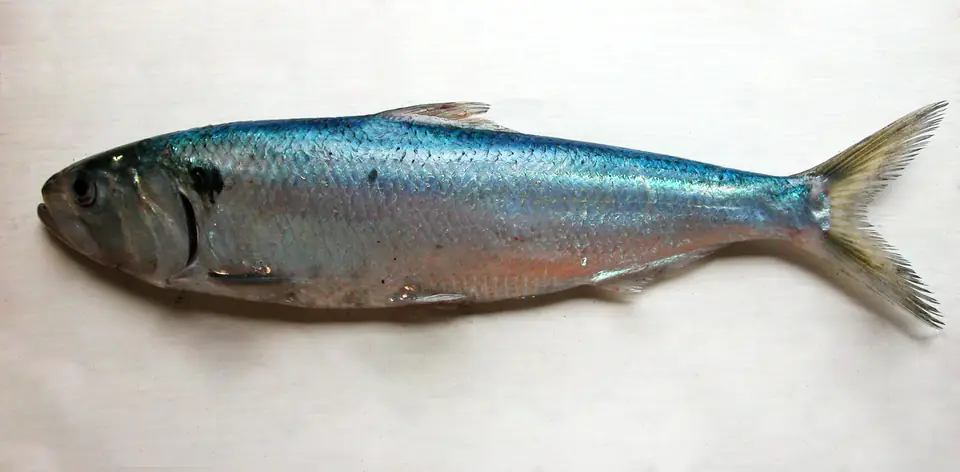
The allis shad looks a lot like a herring. It is silver, with a blue-green back, and it has one large dark spot just behind the gill cover. Look for that spot and you are halfway to a name. Another clue is that it has no lateral line. Adults are typically 30 to 60 cm long. This is a fish that lives at sea but runs up rivers to spawn, and the young spend time in estuaries before heading out. Adults go to the spawning grounds between April and June. Here is the important part. Allis shad are rare and protected, under the Bern Convention, the EU Habitats Directive and the Wildlife and Countryside Act 1981. It is illegal to kill, injure or take one. So this is not a species anglers should be looking for. If one does turn up on the end of a line, the rule is simple: return it straight away and unharmed. It is a fish to know by sight and, if you are lucky enough to see one, to put back carefully.
On the boat
The sources give no angling method for allis shad, and no Sussex months, so there is no honest advice to give on how to catch one from a boat. It is a protected fish and is not a target species. The only seasonal detail we have is that adults head for their spawning grounds between April and June. If one is ever hooked by chance, release it at once.
British boat-caught record
None listed
No British boat-caught record is listed for this species. The British Record Fish Committee list shows the boat weight as unclaimed. For interest, the shore record is 4 lb 12 oz 7 dms (2.166 kg), caught by P B Gerrard off Chesil Beach, Dorset, in 1977.
How we label records: the British boat-caught records table explains confirmed, claimed and none listed.
Care and rules
PROTECTED. Allis shad are rare and protected, and it is illegal to kill, injure or take one. Return any fish immediately and unharmed. Rules change: check the current rules before you fish.
Did you know?
Allis shad live at sea but run up rivers to spawn, and the young spend time in estuaries. Adults head for the spawning grounds between April and June, according to Wikipedia.
Questions about the allis shad
What is the British boat-caught record for allis shad?
No British boat-caught record is listed for this species. The British Record Fish Committee list shows the boat weight as unclaimed. For interest, the shore record is 4 lb 12 oz 7 dms (2.166 kg), caught by P B Gerrard off Chesil Beach, Dorset, in 1977.
Is allis shad caught off the Sussex coast?
Not according to the sources behind this guide.
When is the best time to catch allis shad?
Around Britain: Adults go to the spawning grounds between April and June (Wikipedia). Our sources give no months for Sussex.
How big does an allis shad get?
Adults are typically 30 to 60 cm.
Sources
- Wikipedia: allis shad: en.wikipedia.org
- BRFC sea fish records, June 2026: anglingtrust.net
Picture: Isabelle Cheret, Luisa Metral, file page on Wikimedia Commons. Every picture in the guide is listed on the picture credits page.