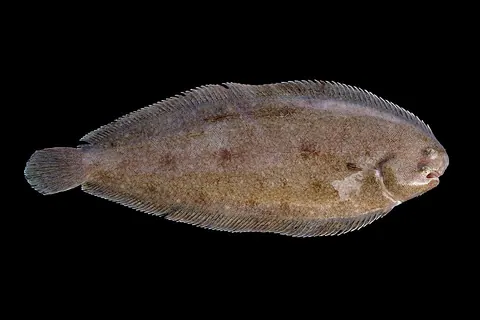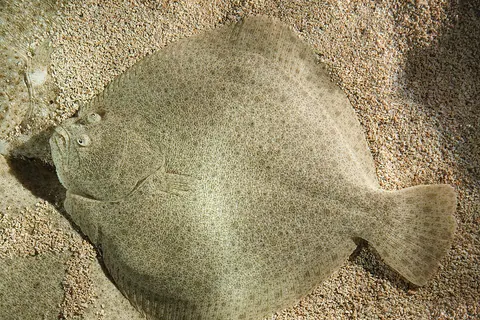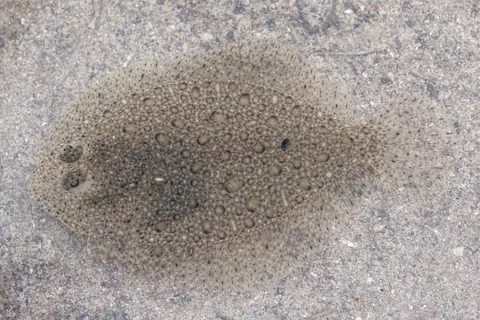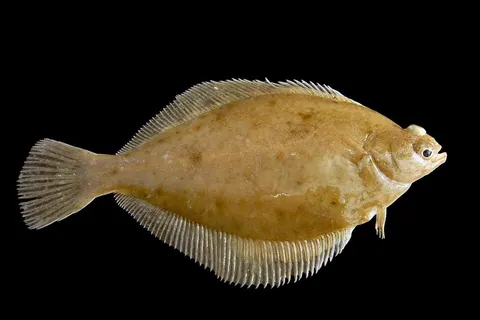
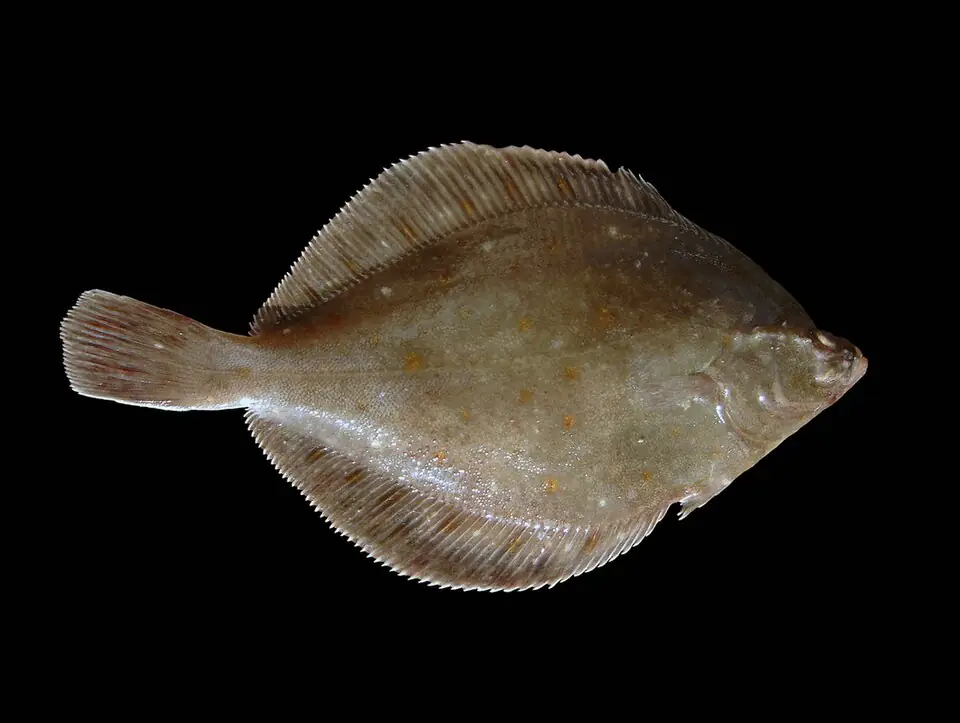
Plaice are a classic flatfish, and the orange spots give them away. Plaice are fished throughout the Sussex district, and the Kestrel Warrior site lists them on the sandbanks in spring. British boat record: confirmed.
Download the plaice fish guide (PDF)2 pages, A4, 121 KB: the facts on this page, the picture and how to fish with us. Free to print.
About the plaice
Plaice are a classic flatfish, and the orange spots give them away. This is a right-eyed fish, brown or green on top with bright orange spots and a white underside, and a row of bony bumps sits behind the eyes. It lives on sand, mud and shingle. Adults are usually in deeper water, 10 to 200 m, while young fish use shallow sandy coasts and estuaries.
Size depends on the source. One guide gives up to about 26 in and 10 lb, with shore fish typically 1 to 3 lb. Wikipedia gives a maximum of 78 cm and 5.7 kg, and typical fish of 50 to 70 cm.
Shore anglers most often catch them from March to September. The fish move inshore in spring and offshore in autumn to spawn, and spawning runs from December to May. Worms such as ragworm and lugworm on small hooks are the usual baits in the shore guide.
Off Sussex they are a spring fish on the sandbanks, and Kestrel Warrior runs an 8-hour flatfish drift. The minimum size is 27 cm, so measure before you keep one, and check the current rules.
On the boat
Boat anglers fish for plaice on flatfish drift trips, and Kestrel Warrior lists an 8-hour flatfish drift. The shore guides use worms, ragworm and lugworm, on small hooks and flapping rigs with beads. In Britain they are most often caught by shore anglers from March to September, moving inshore in spring and offshore in autumn. On the Sussex sandbanks the record points to spring.
British boat-caught record
Confirmed record
- Weight
- 10 lb 3 oz 8 dr (weight list, now frozen). A length-based boat record of 68 cm was set in 2025.
- Where
- Longa Sound, Scotland. Length record: North Shetland, from charter boat Ascention.
- When
- 1974 (length record 2025)
- Angler
- H Gardiner (aged 16). Length record: Jeffrey Iggo.
Confirmed British boat-caught record: H Gardiner (aged 16), 10 lb 3 oz 8 dr, Longa Sound, Scotland, 1974. The official weight-based boat records were frozen in June 2024, and newer claims are by length only. A length-based boat record of 68 cm was set in 2025 by Jeffrey Iggo, from the charter boat Ascention at North Shetland. The list gives years, not full dates.
How we label records: the British boat-caught records table explains confirmed, claimed and none listed.
Care and rules
Minimum size is 27 cm on the gov.uk MCRS list. Plaice stocks are within safe limits according to ICES, as reported by Wikipedia. Rules change: check the current rules before you fish.
Did you know?
Boat records now go by length. The 2025 plaice record of 68 cm came from a charter boat, Ascention, at North Shetland, and Jeffrey Iggo is the angler named for it.
Questions about the plaice
What is the British boat-caught record for plaice?
Confirmed British boat-caught record: H Gardiner (aged 16), 10 lb 3 oz 8 dr, Longa Sound, Scotland, 1974. The official weight-based boat records were frozen in June 2024, and newer claims are by length only. A length-based boat record of 68 cm was set in 2025 by Jeffrey Iggo, from the charter boat Ascention at North Shetland. The list gives years, not full dates.
Is plaice caught off the Sussex coast?
Yes. Plaice are fished throughout the Sussex district, and the Kestrel Warrior site lists them on the sandbanks in spring.
When is the best time to catch plaice?
Off Sussex: Spring, on the sandbanks (Kestrel Warrior charter site). Around Britain: Most commonly caught by shore anglers March to September; moves inshore in spring and offshore in autumn to spawn. Spawning runs December to May.
How big does a plaice get?
Up to about 26 in and 10 lb; shore fish typically 1-3 lb. Wikipedia gives a maximum of 78 cm and 5.7 kg and typical 50-70 cm.
Sources
- Wikipedia: European plaice: en.wikipedia.org
- British Sea Fishing: Plaice: britishseafishing.co.uk
- BRFC sea fish listings June 2026: anglingtrust.net
- Sussex IFCA: species: sussex-ifca.gov.uk
- Kestrel Warrior: kestrelwarrior6.co.uk
- Gov.uk MCRS: gov.uk
Picture: Hans Hillewaert, file page on Wikimedia Commons. Every picture in the guide is listed on the picture credits page.