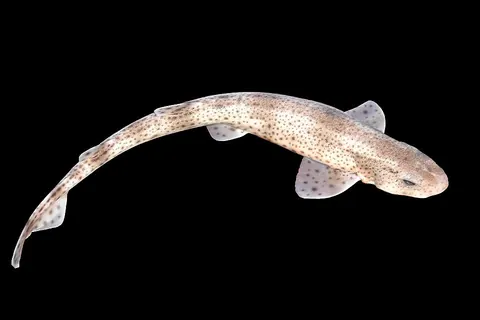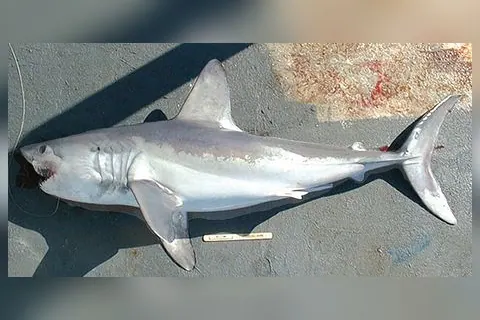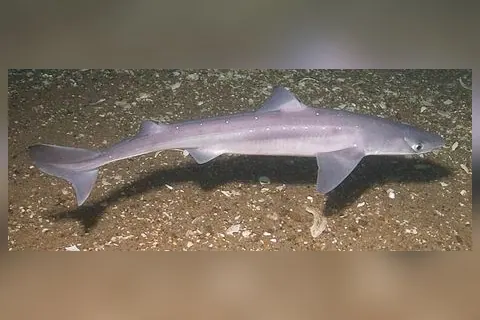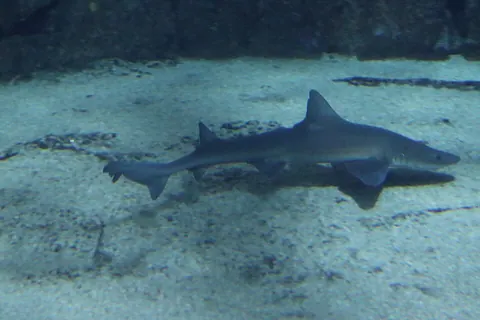
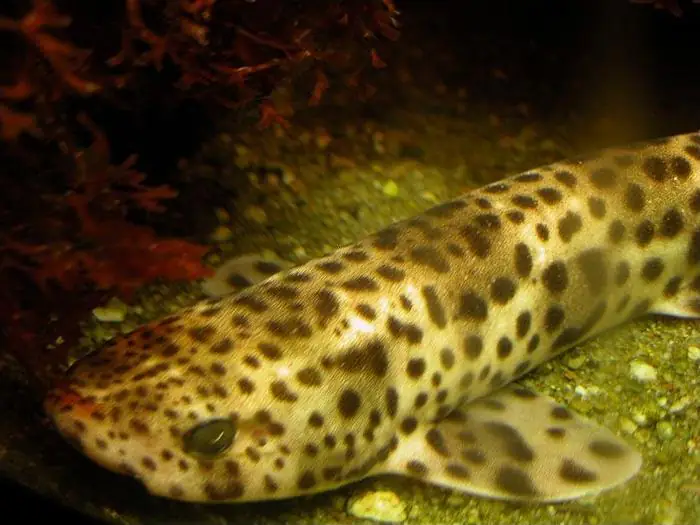
The bull huss, also called the greater spotted dogfish or nursehound, is a stout catshark with large dark blotches and spots, rough skin and nasal flaps that do not reach the mouth. Kestrel Warrior lists bull huss among its catches over wrecks. British boat record: confirmed.
Download the bull huss fish guide (PDF)2 pages, A4, 145 KB: the facts on this page, the picture and how to fish with us. Free to print.
About the bull huss
The bull huss, also called the greater spotted dogfish or nursehound, is a stout catshark with large dark blotches and spots, rough skin and nasal flaps that do not reach the mouth. Nursehound and bull huss are the same species, and the official list calls it Bull Huss. It grows to about 5 ft and 25 lb. Shore fish are typically about 3 ft and 8 lb, and Wikipedia gives a maximum of 1.6 m. It likes deeper water and rocky ground, resting in crevices by day and feeding mostly at night. It is most common at 20 to 60 m. Eggs are laid from March to October, and adults move shallow in spring or early summer. The IUCN lists it as Vulnerable (2021), and most anglers return them. Kestrel Warrior lists bull huss among its catches over wrecks. If you like fish with a bit of character, this is a good one to meet, then send back into the water.
On the boat
Bull huss are fished near rocky outcrops with a 2/0 to 4/0 hook, up to 6/0, on a single-hook rig with big baits such as mackerel strip, squid, cuttlefish or sandeel. Kestrel Warrior lists them among its catches over wrecks. The record gives no catch months for Sussex, so none are given here. It rests in crevices by day and feeds mostly at night, and it is most common at 20 to 60 m, so rough ground at that depth is the place to look.
British boat-caught record
Confirmed record
- Weight
- 22 lb 4 oz (10.092 kg)
- Where
- Minehead, Somerset
- When
- 1986
- Angler
- M L Hall
Confirmed British boat-caught record: M L Hall, 22 lb 4 oz (10.092 kg), caught at Minehead, Somerset, in 1986. The official list gives the year only, not the full date, and calls the fish Bull Huss. The official weight-based boat records were frozen in June 2024, and newer claims are by length only.
How we label records: the British boat-caught records table explains confirmed, claimed and none listed.
Care and rules
Vulnerable (IUCN, 2021). Most anglers return them. A minimum size of 23 in (58 cm) is listed for it, but check it before keeping anything. Rules change: check the current rules before you fish.
Did you know?
Nursehound and bull huss are the same species. It rests in crevices by day and feeds mostly at night, and it is most common at 20 to 60 m.
Questions about the bull huss
What is the British boat-caught record for bull huss?
Confirmed British boat-caught record: M L Hall, 22 lb 4 oz (10.092 kg), caught at Minehead, Somerset, in 1986. The official list gives the year only, not the full date, and calls the fish Bull Huss. The official weight-based boat records were frozen in June 2024, and newer claims are by length only.
Is bull huss caught off the Sussex coast?
Yes. Kestrel Warrior lists bull huss among its catches over wrecks.
When is the best time to catch bull huss?
Around Britain: Eggs are laid March to October; adults move shallow in spring or early summer (Wikipedia). Our sources give no months for Sussex.
How big does a bull huss get?
Up to 5 ft and 25 lb; shore fish typically about 3 ft and 8 lb. Wikipedia gives a maximum of 1.6 m.
Sources
- britishseafishing.co.uk Bull huss: britishseafishing.co.uk
- Wikipedia: Nursehound: en.wikipedia.org
- Kestrel Warrior: Sharks off Brighton: kestrelwarrior6.co.uk
- BRFC Sea Fish Records June 2026: anglingtrust.net
- Wikimedia Commons image page: commons.wikimedia.org
- Kestrel Warrior: Fish species off Sussex: kestrelwarrior6.co.uk
Picture: Petra Karstedt (tiermotive.de), file page on Wikimedia Commons. Every picture in the guide is listed on the picture credits page.