
Read more
Every species you might land.
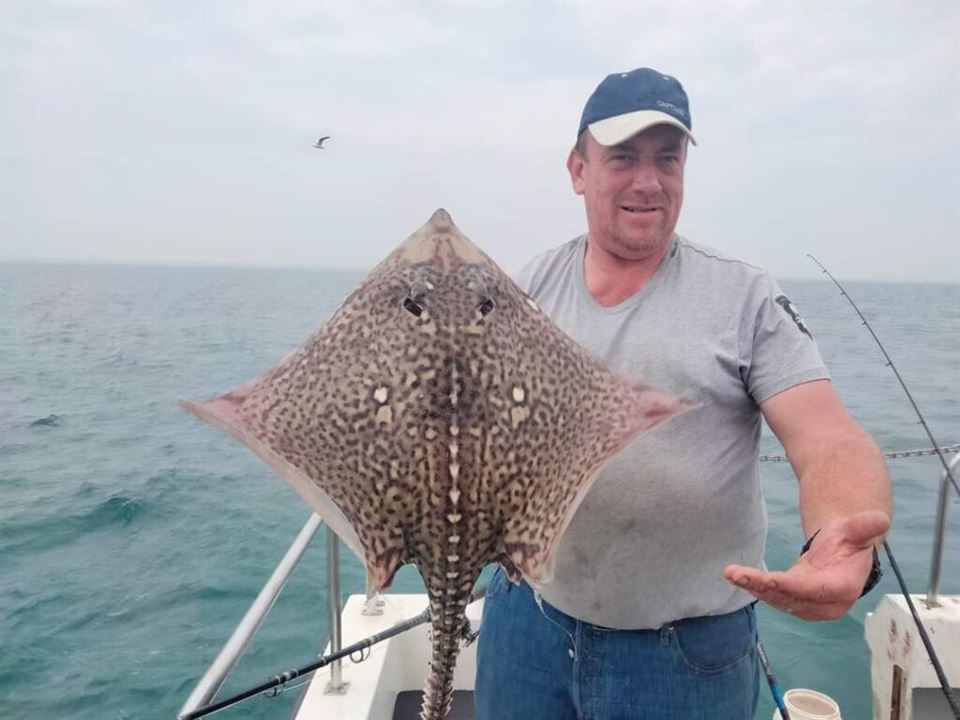
The undulate ray is one of the prettiest fish in the Channel and one of the most closely watched. Here is how to spot it, how it differs from a thornback, and what the Shark Trust and Sussex Wildlife Trust say about it.
The Shark Trust counts 21 species of skate and ray in British and Irish waters. Off Sussex the ones that matter most to anglers are the thornback, undulate, small-eyed and spotted rays. The University of Sussex survey of the Shoreham to Selsey seabed recorded spotted ray.
The Marine Life Information Network (MarLIN) describes the small-eyed ray as particularly common in the Bristol and English Channels, and its IUCN Red List assessment of November 2023 lists it as Near Threatened.
Oddly, the thornback is a skate in the scientific sense, even though we all call it a ray. The Shark Trust makes the same point.
Pattern first. The Shark Trust says the undulate ray is easy to recognise by its ornate markings: undulating lines and spots on its back, which is where the name comes from. It grows to about 90 cm in total length, lives on sandy or muddy seabed down to about 200 m though more commonly in shallower water, and feeds on shrimps and crabs.
A thornback looks different. It is kite-shaped, with a blotchy brown or grey back and a short, rather dumpy nose. Its best-known feature is the thorns. A row of 30 to 50 thorns runs along the midline, and mature fish carry larger thorns with swollen, button-like bases called bucklers, best developed on the backs and tails of mature females.
Spotted ray is the trickier one. The Shark Trust says its eggcases look very similar to undulate ray eggcases where their ranges overlap on the south coast, and the two are informally lumped together as 'spundulates'. For a live fish, a clear photograph of the whole back, both wings and the tail is more reliable than a quick glance.
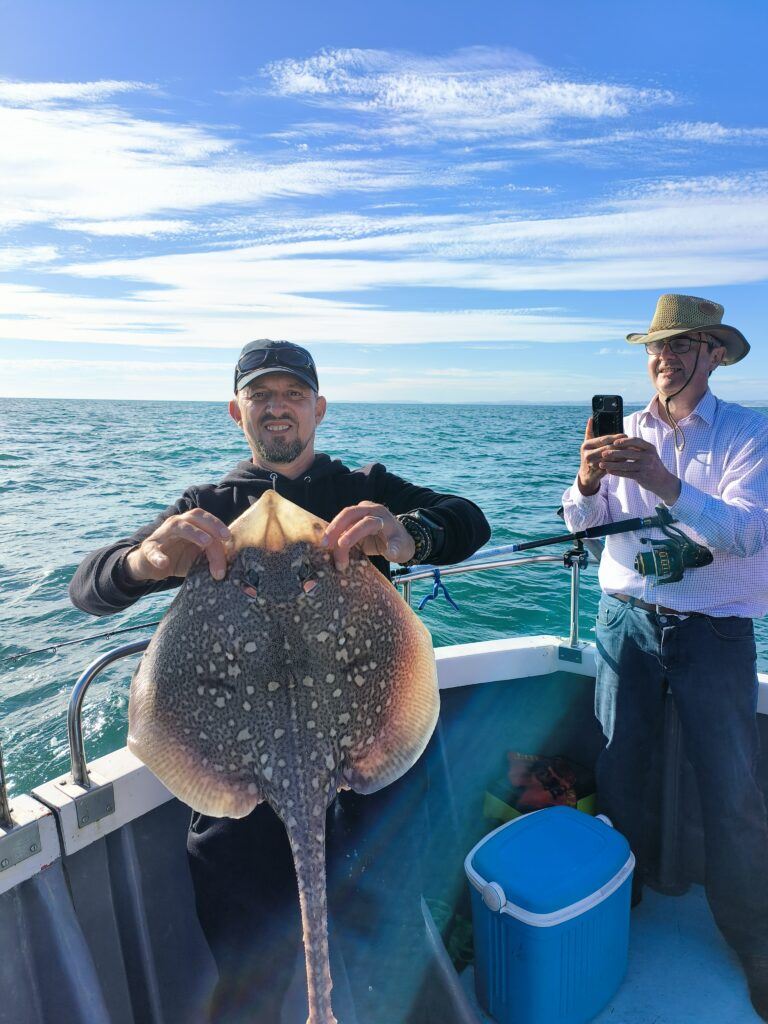
Because it is a species in trouble globally and doing comparatively well in a few places, of which the Channel seems to be one. The IUCN lists the undulate ray as Endangered, but the Shark Trust says it is recovering in some areas. Its populations are described as very fragmented, with a small number of areas where it is locally common.
Sussex Wildlife Trust says Sussex has a healthy population of undulate rays and calls it a priority protected species in the UK. It says the reasons for the higher numbers are not fully known, and that one possibility is the nine Marine Conservation Zones off Sussex, where fishing is restricted.
The Undulate Ray Project's report notes that most verified records submitted come from the south coast, particularly the eastern English Channel, and around the Channel Islands.
Captain Ant's own bio states that he holds a CBUK record for undulate ray.
They depend on where you are, the fishery and the year, and they change. The Shark Trust says management of the undulate ray includes minimum and maximum landing sizes and a closed season, that targeting is completely prohibited in some areas, and that as bycatch the species may be landed in some fisheries and discarded in others.
For anglers on a boat, the practical answer is to check the current rules for your sea area with the MMO and Sussex IFCA before you fish, and to release any ray you are not certain you may keep. We do not quote size or bag limits here because they change.
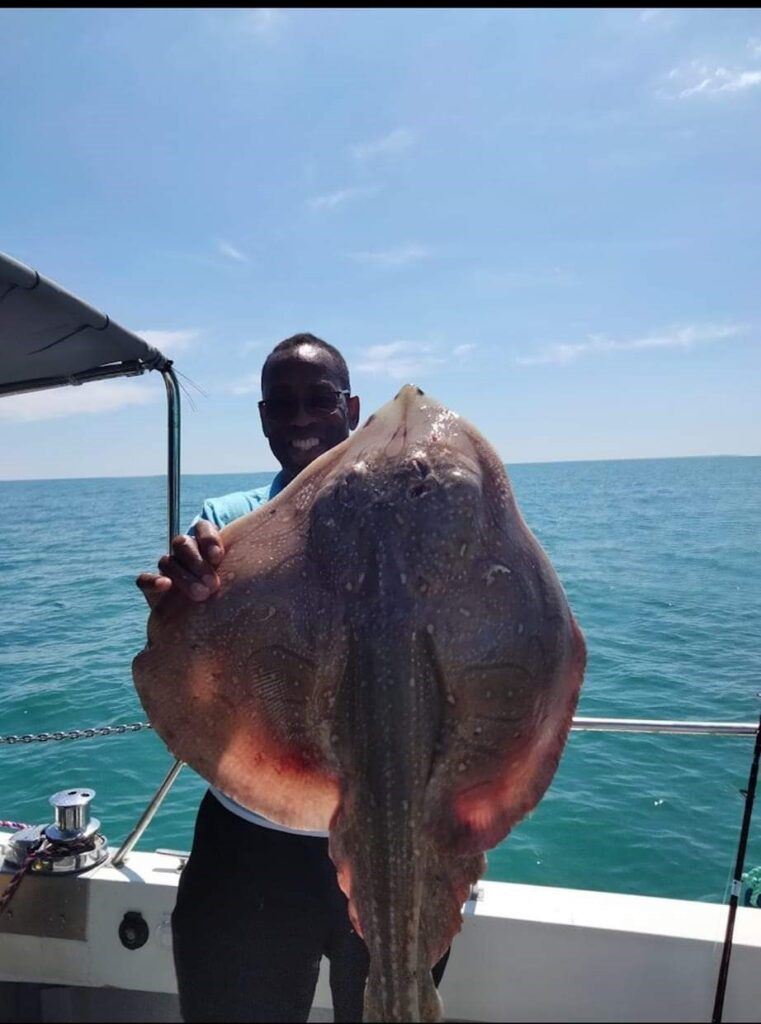
Rays are slow to mature and produce relatively few young, so they recover slowly when too many are taken. That is the main reason conservation groups ask anglers to return them in good condition.
Sussex IFCA's Elasmobranch Voluntary Code of Conduct was written to improve survival of huss, smooth-hounds, skates and rays after capture. It sits alongside the Minimum Size Byelaw 2021, which applies to commercial and recreational fishers in the Sussex district. The code is voluntary guidance; the byelaw is not.
A University of Plymouth tagging project in Dorset and the Solent, funded by Defra, gives a simple model for handling: minimise handling, return the fish to the water as soon as possible, and photograph it. If a fish carries a tag, note the tag details.
Photograph what you catch before release, holding it flat so the whole back, both wings and the tail are in the frame. Note the date and roughly where you were fishing while it is fresh in your mind. A clear picture is what lets a species be identified properly afterwards, and it is the only record you can share with a recording group.
On the beach, the Shark Trust's Great Eggcase Hunt asks people to photograph and submit eggcases washed up on the strandline, and Sussex Wildlife Trust points readers to it to help track local populations.
Rays turn up on our flatfish and plaice drifts and inshore fishing trips, and the Sussex species guide has the rest of what lives here. You can check the current prices and contact us to ask about a date.
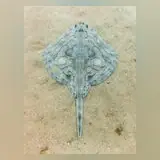 Undulate ray Raja undulata
 Thornback ray Raja clavata
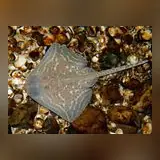 Small-eyed ray Raja microocellata
 Spotted ray Raja montagui
= caught off the Sussex coast. More species in our UK sea fish guide.
Fancy a day on the water? See the Prices 2027, or get in touch and we will find the right trip for you.
Undulate rays have ornate lines and spots on the back. Thornbacks are kite-shaped with a blotchy back, a short snout and a row of thorns along the midline, with larger button-based thorns on mature fish.
The IUCN lists the undulate ray as Endangered, though the Shark Trust says it is recovering in some areas. Sussex Wildlife Trust says Sussex has a healthy population.
It depends on the species and the current rules, so check the MMO and Sussex IFCA before you fish. Any ray you cannot identify with confidence should be returned.
It is a citizen-science project where people photograph and submit shark, skate and ray eggcases found on beaches, which helps track where species such as the undulate ray live.
Every species you might land.
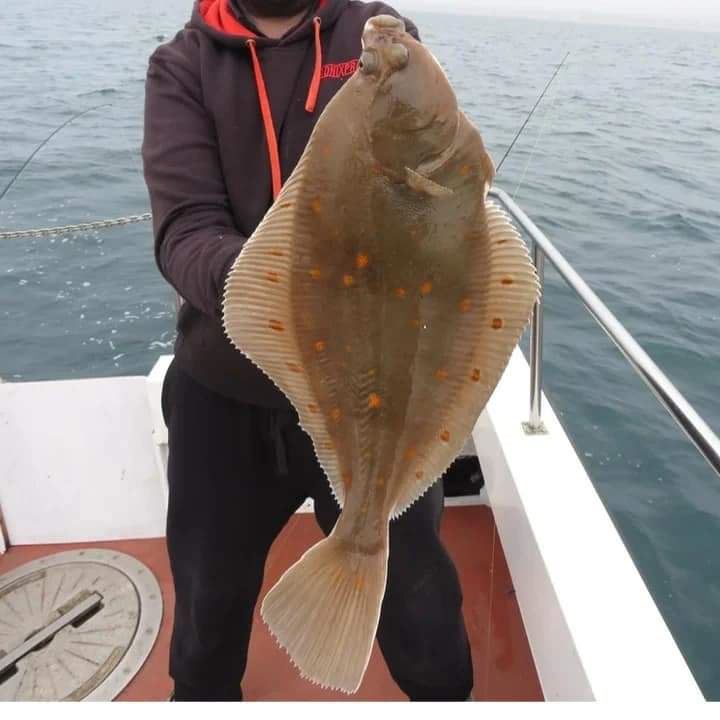
8 hours drifting for plaice, dabs, flounder and rays.

A 4-hour trip for multiple species over sand, reefs and rough ground.
Articles on the fish, wrecks and history of the Sussex coast.