
The greater sandeel is the biggest of the sandeels, and still not a big fish. Our sources do not record it off the Sussex coast. British boat record: none listed.
Download the greater sandeel fish guide (PDF)2 pages, A4, 130 KB: the facts on this page, the picture and how to fish with us. Free to print.
About the greater sandeel
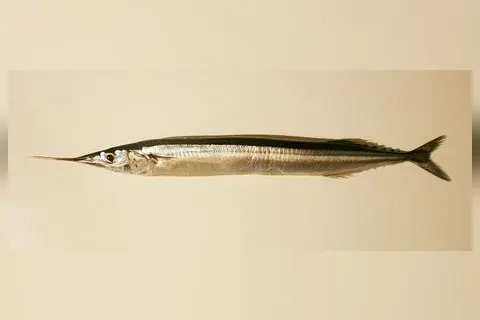
The greater sandeel is the biggest of the sandeels, and still not a big fish. It is long, thin and eel-like, silver along the sides with a lime-green back. Look closely and you will see a black smudge between the eye and the snout, and a lower jaw that sticks out. Fully grown, it reaches about 35 cm. It lives from the low-water mark down to well over 100 m, usually over clean sand, which is why it belongs to sandy ground rather than reef or wreck. It breeds from March to August, so those months tell you about its life cycle, not when to catch it. The thing worth knowing is its place in the food chain: sandeels are a key food for seabirds and for other fish, so this slim silver fish matters far more to the wider sea than its size suggests. Our sources give no fishing methods, no catch months and no Sussex notes for it, so we have kept to what is known. It is a neat, slim, silvery fish, and it is worth being able to recognise.
On the boat
We do not have a verified method, month or ground for catching greater sandeels from a boat. The species record gives no fishing methods and no Sussex months, so nothing is guessed here. What is known is where it lives: clean sand from the shoreline down past 100 m. It breeds March to August, but that is a breeding period, not a catch calendar.
British boat-caught record
None listed
No British boat-caught record is listed for this species. The official June 2026 list does carry a greater sandeel in its mini-species table: 239 g, B K Le Breton, Amfroque, Herm, Guernsey, Channel Islands, in 1979. That table does not split boat and shore catches, so it is not confirmed as a boat-caught fish.
How we label records: the British boat-caught records table explains confirmed, claimed and none listed.
Care and rules
The greater sandeel is not listed on the Gov.uk minimum conservation reference sizes page (checked 2026), so no landing size is given there. Sandeels are key food for seabirds and fish, which is a good reason to handle any you catch gently. Rules change: check the current rules before you fish.
Did you know?
Sandeels are a key food for seabirds and for other fish, so this slim silver fish matters far more to the wider sea than its size suggests.
Questions about the greater sandeel
What is the British boat-caught record for greater sandeel?
No British boat-caught record is listed for this species. The official June 2026 list does carry a greater sandeel in its mini-species table: 239 g, B K Le Breton, Amfroque, Herm, Guernsey, Channel Islands, in 1979. That table does not split boat and shore catches, so it is not confirmed as a boat-caught fish.
Is greater sandeel caught off the Sussex coast?
Not according to the sources behind this guide.
When is the best time to catch greater sandeel?
Around Britain: Breeds March to August (Wikipedia). This is a breeding period, not a catch calendar. Our sources give no months for Sussex.
How big does a greater sandeel get?
Up to 35 cm, the largest sandeel (Wikipedia).
Sources
- Wikipedia: Hyperoplus lanceolatus: en.wikipedia.org
- BRFC sea fish listings June 2026: anglingtrust.net
- Gov.uk MCRS in UK waters: gov.uk
Picture: Julien Renoult, file page on Wikimedia Commons. Every picture in the guide is listed on the picture credits page.