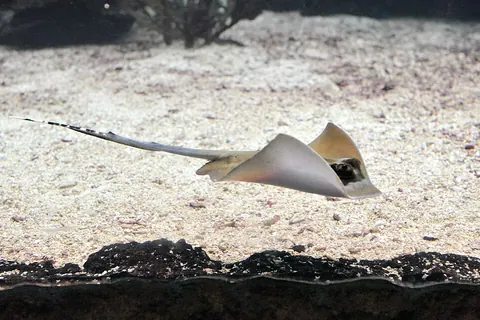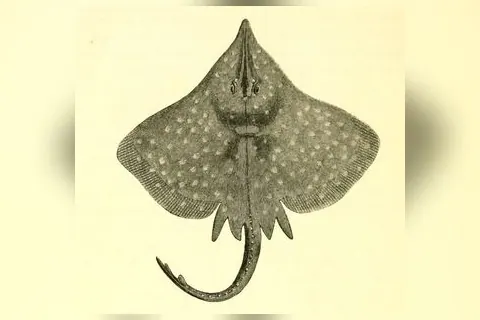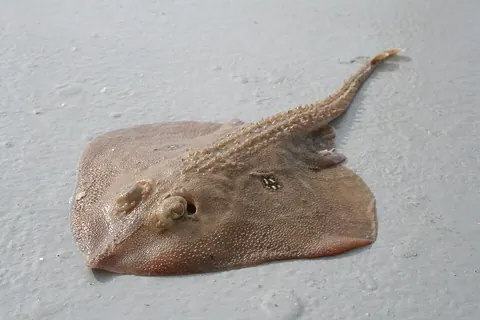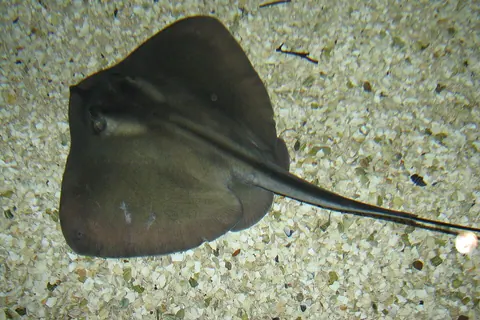
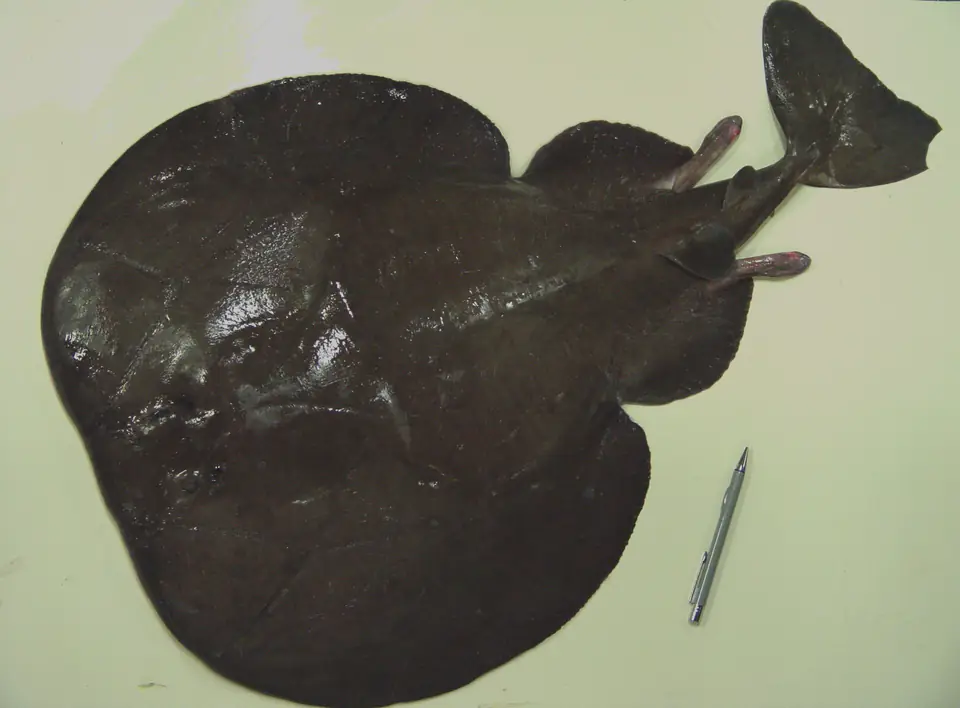
The electric ray, also called the Atlantic torpedo, does not look like the other rays you might meet. Our sources do not record it off the Sussex coast. British boat record: confirmed.
Download the electric ray fish guide (PDF)2 pages, A4, 172 KB: the facts on this page, the picture and how to fish with us. Free to print.
About the electric ray
The electric ray, also called the Atlantic torpedo, does not look like the other rays you might meet. It is broad and almost circular, with smooth skin in olive, brown or black. The eyes are small, and the short tail ends like a roundfish's.
Most are 3 to 4 ft long and weigh 30 to 40 lb, though the species can reach about 6 ft and 200 lb. It lives mostly on the bottom, but it also hunts in mid-water. It is nocturnal, and by day it rests partly buried in sand.
In British waters it turns up in parts of the English Channel, the Celtic Sea, Wales, Northern Ireland and west Scotland. Anglers only very occasionally catch one on rod and line, and most come up as trawl bycatch. That makes it more of a talking point than a target.
The IUCN lists it as Data Deficient, so there is still much to learn about it. If you ever find one on the end of the line, handle it with care.
On the boat
Very occasionally an electric ray is caught on rod and line. Most are trawl bycatch instead. Our records do not give months for it in Britain or off Sussex, and they do not name baits, rigs or fishing grounds, so we will not guess. What is known is that it lives mostly on the bottom, is nocturnal, and rests partly buried in sand by day.
British boat-caught record
Confirmed record
- Weight
- 96 lb 1 oz
- Where
- Off Dodman Point, Cornwall
- When
- 1975
- Angler
- N J Cowley
Confirmed British boat-caught record: N J Cowley, 96 lb 1 oz, off Dodman Point, Cornwall, in 1975. This is from the official British Record Fish Committee list (updated 18 June 2026), where it appears as Ray (Electric). Only the year is given. Official weight-based boat records were frozen in June 2024, and new boat claims must be measured.
How we label records: the British boat-caught records table explains confirmed, claimed and none listed.
Care and rules
Handle with care. The IUCN lists the species as Data Deficient. One angling source says no UK minimum size applies, but that is a single source only. Rules change: check the current rules before you fish.
Did you know?
Very few electric rays are caught by anglers. The species record says they are only very occasionally taken on rod and line, and that most come up as trawl bycatch.
Questions about the electric ray
What is the British boat-caught record for electric ray?
Confirmed British boat-caught record: N J Cowley, 96 lb 1 oz, off Dodman Point, Cornwall, in 1975. This is from the official British Record Fish Committee list (updated 18 June 2026), where it appears as Ray (Electric). Only the year is given. Official weight-based boat records were frozen in June 2024, and new boat claims must be measured.
Is electric ray caught off the Sussex coast?
Not according to the sources behind this guide.
When is the best time to catch electric ray?
Our sources do not give months for the electric ray, for Sussex or for the rest of Britain.
How big does an electric ray get?
Up to about 6 ft and 200 lb; most are 3-4 ft and 30-40 lb.
Sources
- British Sea Fishing: Electric Ray: britishseafishing.co.uk
- BRFC Sea Fish Records, June 2026: anglingtrust.net
Picture: NOAA's Fisheries Collection (US government work), file page on Wikimedia Commons. Every picture in the guide is listed on the picture credits page.