
Read more
Every species you might land.

Giant Atlantic bluefin tuna have returned to UK waters after decades away. Here is what Cefas and the government publish, and where Sussex fits in.
Atlantic bluefin tuna largely disappeared from British seas in the 1990s, and Cefas, the government's fisheries science body, describes the species as endangered. Since the middle of the last decade they have been seen far more often.
The clearest picture comes from a Cefas and University of Exeter study published in 2021. It pulled together nearly 1,000 observations from 2013 to 2018, taken from public sightings, eco-tourism boats, scientific surveys and bycatch in the Irish albacore fishery. Cefas reported a year-on-year increase in sightings in south west English waters. The fish arrive from May, some stay as late as January, and numbers peak from August to October.
The data comes mainly from the Celtic Seas, the south west of England, the Isles of Scilly and the north west of Ireland, which is where the observers and survey boats were. It is a record of where people were looking, not a map of every place a bluefin has been.
There is no published count of live bluefin sightings off the Sussex coast, and we would rather say so than invent something exciting.
The Sussex record on file is a dead fish. In early September 2020 a bluefin of about two metres and roughly 180 kg was found on the shore in Chichester Harbour. Sussex IFCA's patrol vessel happened to be working in the harbour and helped lift it aboard, according to the Sussex Express.
That is one fish, and it says little about how many live ones pass through. Nothing here is a claim that we have seen a bluefin from the boat. Kestrel Warrior does not fish for tuna.
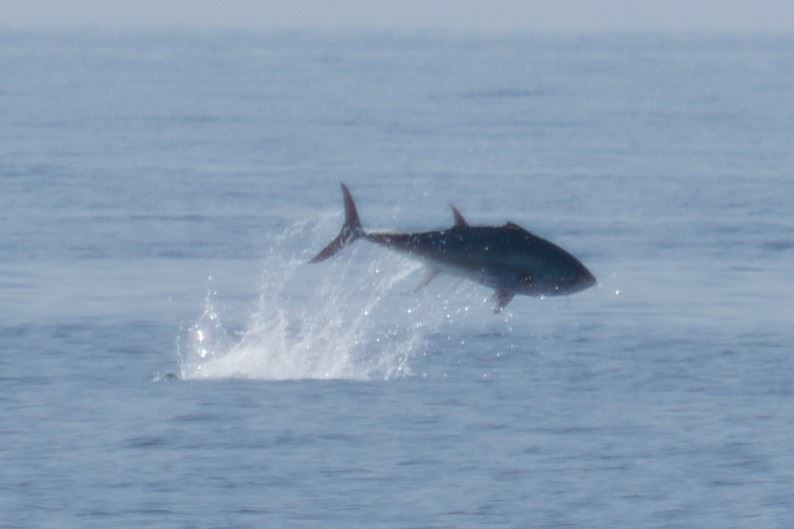
Cefas says the fish come inshore in late summer and autumn to feed on energy-rich shoaling fish such as sprats and herring.
The reason numbers have risen is less settled. A 2019 study, reported by Phys.org, linked the reappearance to a warm phase of the Atlantic Multidecadal Oscillation, a natural long-term ocean cycle, and noted that the decline of mackerel and herring was a likely factor in the tuna's earlier disappearance. An Exeter scientist quoted in the same coverage cautioned against simply blaming climate change, and pointed out that there are no robust population estimates for the fish using UK waters.
So the picture is a mix of food supply and ocean temperature cycles, with no agreed weighting between them.
CHART, short for CatcH And Release Tag, is run by Cefas with recreational angling groups. It began as a pilot in autumn 2021. During the 13-week pilot, 15 vessels tagged and released over 700 bluefin, and more than 1,700 tags went out across the 2021 and 2022 seasons together.
Only trained skippers holding an MMO scientific licence could take paying anglers after bluefin. Live bait was not allowed, the fish could not be brought aboard, and any dead fish had to be landed and handed to the MMO.
On the sea areas, Cefas's 2022 application round invited vessels from the eastern and western English Channel and the Bristol Channel, plus part of the southern North Sea. Successful vessels could fish English parts of ICES divisions 7d, 7e and 7f. The eastern Channel is therefore named. Cefas does not name Sussex or list the ports the boats used, so the published scheme details do not tell us whether any boat worked off Brighton. The 2023 season ran from 14 August to 10 December and was open only to skippers who had taken part before.
Only through a permit scheme. The MMO's 2026 English catch-and-release recreational fishery runs from 13 July to 30 November 2026, with around 150 permits available for English waters.
It is rod and line only. A bluefin must not be harmed, removed from the sea, brought aboard or landed. Successful applicants must complete Angling Trust accredited training before a permit is issued, and every trip must be reported to the MMO within 24 hours of the vessel returning, even if no tuna were caught. Both the vessel owner and the skipper are responsible for compliance.
These details apply to the 2026 season. Permit numbers, dates and charges can change from year to year, and the MMO says permits are free in 2026 but charges are likely in future. Check the current rules before you fish.
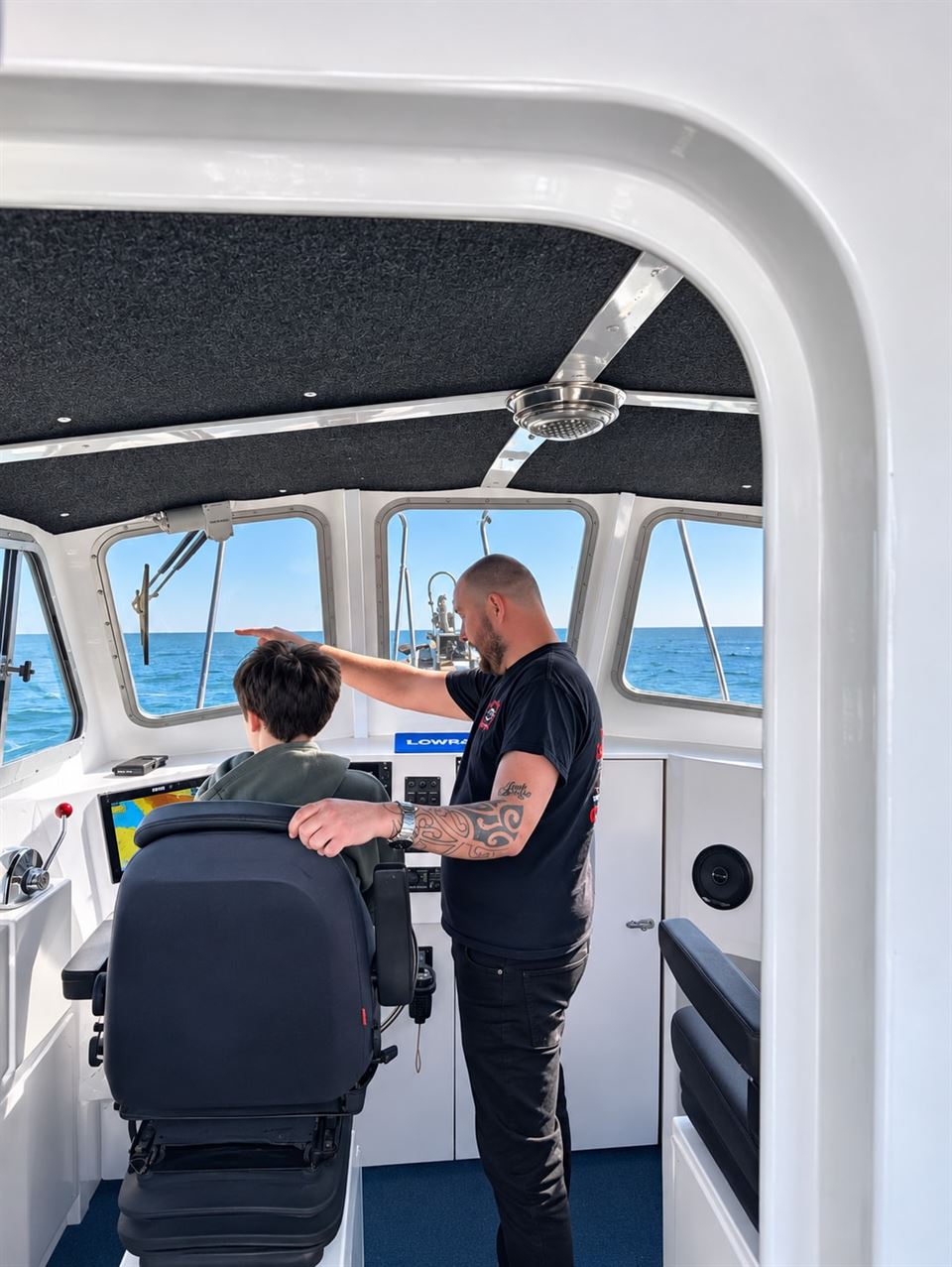
Enjoy it, photograph it, and note where and when. The Exeter and Cefas work relied heavily on public sightings, and the 2021 study included 80 reports submitted through the Thunnus UK project. A date, a position, a rough count and a picture are all useful, and they are easiest to record while you still have the plotter in front of you.
Do not change what you are doing to chase them. A bluefin is not a fish for an ordinary charter trip, and outside the permit scheme nobody should be targeting it.
Where it always was. Our trips are built around bass, mackerel, plaice, pollack, cod and the wrecks, and the Sussex fish species guide shows which fish turn up when.
To see what a day looks like, start with the mackerel fishing trip or the inshore fishing trips, check the current prices, or get in touch with Captain Ant.
= caught off the Sussex coast. More species in our UK sea fish guide.
Fancy a day on the water? See the Prices 2027, or get in touch and we will find the right trip for you.
There is no published count of live sightings off Sussex. The Sussex record on file is a dead bluefin of about 180 kg found in Chichester Harbour in September 2020. Most published sightings data comes from the south west of England and the Celtic Seas.
Only under an MMO catch-and-release permit. The 2026 English fishery runs from 13 July to 30 November 2026, and the fish must be released without being brought aboard. Kestrel Warrior does not fish for tuna.
Cefas's 2022 application round named the eastern and western English Channel, and vessels could fish English parts of ICES divisions 7d, 7e and 7f. Cefas does not name Sussex or list ports.
Cefas says they come inshore in late summer and autumn to feed on sprats and herring. A 2019 study linked the comeback to a warm phase of a natural ocean cycle, but there are no robust population estimates for UK waters.
Every species you might land.
What bites in which month.

Captain Ant on the day.
Articles on the fish, wrecks and history of the Sussex coast.